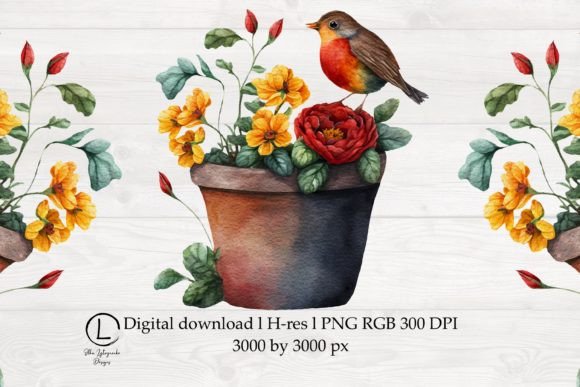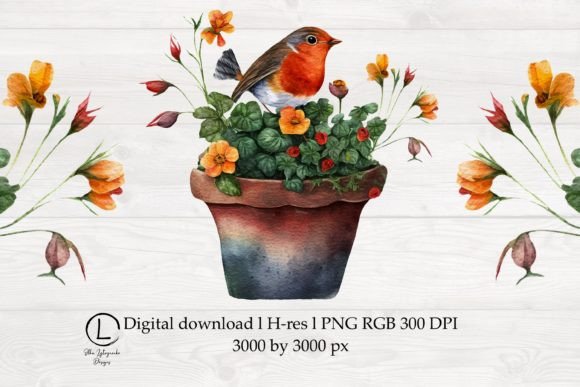
Watercolor Robin Bird in Spring Flowers
The Watercolor Robin Bird in Spring Flowers is a charming graphic design asset that brings a sense of warmth and nature to any project. Its soft, hand-drawn aesthetic creates an inviting mood that can enhance brand identity, social media graphics, and marketing visuals. This illustration feels right at home in lifestyle content, handmade product branding, or seasonal promotions, offering a gentle yet professional touch.
First Impressions and Emotional Tone
As a brand designer, the first thing I notice about the Watercolor Robin Bird in Spring Flowers is its ability to evoke a feeling of calm and renewal. The delicate watercolor strokes and blooming flowers suggest springtime, making it ideal for campaigns focused on fresh starts, eco-friendly products, or wellness themes. It’s not overly bold, but it carries enough visual interest to stand out without overwhelming the viewer.
This design asset works well in both casual and premium branding scenarios. Its clean lines and muted color palette make it adaptable to modern design trends while still maintaining a handmade feel. Whether used in a digital ad or a printable design, it adds a personal touch that can resonate with audiences looking for authenticity and creativity.
Real-World Marketing Applications
For small business branding, the Watercolor Robin Bird in Spring Flowers can be a powerful tool. Imagine launching a new line of organic skincare products—this illustration could serve as a hero graphic for a campaign header, a background for a Pinterest pin, or a decorative element in a downloadable content kit. It supports visual consistency across multiple platforms, helping to build a cohesive brand image.
In packaging design, this illustration could be used as an accent on product labels or inserts. For a boutique flower shop or a stationery brand, it adds a unique flair that differentiates their offerings from competitors. In digital ads, it can act as a subtle backdrop or a focal point, depending on the layout and messaging.
When integrated into social media graphics, the Watercolor Robin Bird in Spring Flowers helps create a recognizable visual language. It can be used as a profile picture, a post header, or part of a branded template in Canva. Its versatility makes it a valuable addition to any content marketing strategy.
Supporting Marketing Goals
One of the key benefits of this design asset is its ability to strengthen a brand's first impression. A visually appealing image can capture attention quickly, which is crucial in today’s fast-paced digital landscape. The Watercolor Robin Bird in Spring Flowers provides a strong visual anchor that aligns with modern design sensibilities while maintaining a warm, approachable tone.
It also contributes to clearer visual hierarchy. When used strategically, this illustration can guide the viewer’s eye through a design, ensuring that the main message remains prominent. This is especially important in digital ads, email banners, and web design, where clarity and focus are essential.
For audience trust and recognition, the consistent use of this illustration across different marketing materials helps reinforce brand identity. It builds familiarity, which can lead to stronger emotional connections and increased engagement. Whether used in blog graphics or event flyers, it adds a layer of professionalism that enhances the overall campaign.
Best Use Cases
The Watercolor Robin Bird in Spring Flowers shines in hero graphics and campaign headers. It can serve as a focal point for product launches, seasonal promotions, or editorial layouts. When paired with a clean font and minimal text, it creates a balanced composition that feels both artistic and functional.
It also works well in branded templates and content bundles. For example, a digital product creator might include this illustration in a set of Canva templates or printable designs, giving users a ready-to-use visual element that aligns with their brand’s aesthetic.
For editorial design and media kits, this illustration adds a touch of elegance that complements written content. It can be used as a section divider, a sidebar graphic, or a decorative element that enhances the reading experience.
Where to Use with Caution
While the Watercolor Robin Bird in Spring Flowers is versatile, it may not be the best fit for formal corporate branding. In environments where a more structured or minimalist approach is preferred, this illustration could appear too whimsical or distracting.
It should also be used carefully in dense information layouts, small mobile graphics, or low-contrast backgrounds. In these cases, the details of the illustration may become lost or difficult to read. Similarly, in text-heavy ads or overly minimal brands, the design could compete with the main message rather than support it.
Practical Brand Designer Notes
Before integrating the Watercolor Robin Bird in Spring Flowers into a campaign, test it with your brand’s color palette. Ensure that the colors complement your existing visuals and don’t clash with your brand’s identity. Check how it looks in black and white, as this can reveal any hidden details or contrast issues.
Place it inside real campaign mockups to see how it interacts with other elements. Preview it on mobile screens to ensure readability in smaller sizes. Compare it against competitor visuals to maintain a unique edge in the market.
Experiment with different font styles—serif, sans serif, script, handwritten, or display fonts—to find the best pairing. Review spacing and balance to avoid clutter. Finally, always confirm commercial licensing before using it in paid campaigns, client work, or business branding.
Conclusion
The Watercolor Robin Bird in Spring Flowers is a thoughtful graphic design asset that offers both aesthetic appeal and practical value. It can elevate a brand’s visual identity, support content marketing efforts, and create a memorable impression with audiences. Whether used in social media graphics, packaging design, or digital ads, it adds a touch of nature and creativity that resonates with a wide range of consumers.